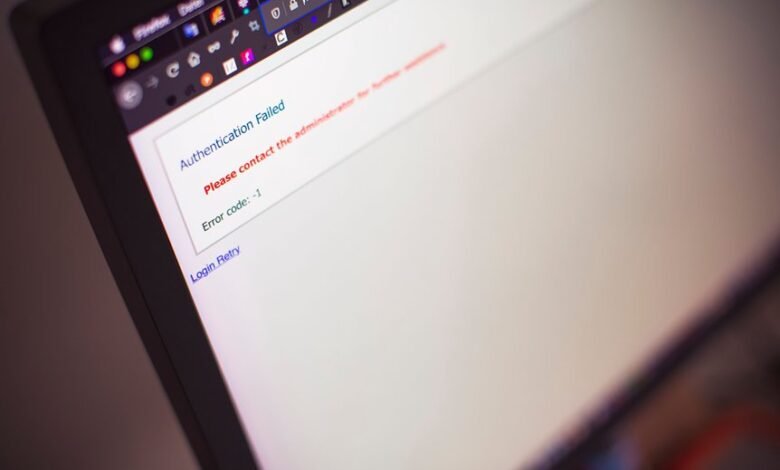
The guide begins by identifying the exact 403 scenario and gathering device details, then verifies account status and cross-platform access. It prescribes alternative access paths and structured debugging steps, while noting the importance of preserving context across environments. The approach is methodical and evidence-driven, emphasizing timestamps and outcomes. It keeps user actions separate from system responses and calls for escalation with a clear trail when anomalies persist, leaving a careful, practical path forward for those still facing issues.
Identify the Exact 403 Scenario and Collect Device Details
To identify the exact 403 scenario, analysts begin by confirming the precise error message and URL context, then categorize whether the 403 stems from permissions, resource restrictions, IP blocking, or authentication failures.
The process emphasizes identify account details, verify access status, and collect device information (OS, browser, user agent) to inform controlled remediation and auditing.
Verify Account Status and Access Scope Across Platforms
Account status and access scope must be verified across all platforms to determine whether permissions, role assignments, or policy constraints differ by environment.
The analysis evaluates each environment for consistency, ensuring that verify account and access scope align with intended privileges.
Discrepancies indicate misconfigurations or policy drift, prompting targeted remediation while preserving user autonomy and operational flexibility.
Try Alternative Access Paths and Debugging Steps
Exploring alternative access paths and debugging steps can reveal where standard remedies fall short and highlight environment-specific constraints.
The analysis outlines systematic actions: identify access anomalies, gather diagnostic signals, verify platform scopes, and compare cross-platform behaviors.
If discrepancies persist, escalate with logs, preserving timestamps and events to enable targeted remediation.
This methodical approach supports informed decisions and broader operational freedom.
Escalate With Evidence and When to Seek Support
Escalation with solid evidence begins when standard remedies fail to resolve the issue. The approach records reproducible steps, timestamps, and outcomes, forming a verifiable trail. Analysts compare results, highlight anomalies, and separate user actions from system responses. When gaps appear, escalate evidence to higher support tiers and seek support, ensuring accountability and timely remediation without compromising user autonomy.
Frequently Asked Questions
Can 403 Occur Due to Temporary Server-Side Blocks or Rate Limiting?
Yes, 403s can arise from temporary server-side blocks or rate limiting. An analyst examines security blocks, client side blocks, and server responses to distinguish access control issues from transient networkings, ensuring accurate interpretation of the involved access control mechanisms.
How Does IP Address Influence 403 on Multi-Device Access?
IP address influence on 403 across devices is significant; blocks can cascade, limiting multi device access. IP address blocks may trigger rate limits, while shared addresses complicate isolation. The analytical approach examines patterns, transparency, and renewal strategies for freedom-minded users.
Is There a Difference Between 403 Vs 401 for User Errors?
Yes, there is a difference: 401 signals authentication failure (user errors vs expired credentials) while 403 indicates server permissions or access scope restrictions. The distinction hinges on authentication state versus authorization scope, guiding remediation and user expectations. Analytical, concise.
Do Browser Extensions Cause 403 When Logging In?
Extensions can contribute to 403s during login by causing extension blocks, session timeouts, or browser compatibility issues, affecting login tokens; a systematic audit assesses each factor and mitigates risks without constraining user autonomy.
Can 403 Persist After Credential Changes and How to Refresh?
Yes, 403 errors can persist after credential changes; a credential refreshes canaries approach helps detect stale tokens, while examining 403 versus 401 differences clarifies access, and analyzing browser extension risks prevents recurring blocks during refresh attempts.
Conclusion
In summation, the process hinges on precise replication of the failure: document exact error text and URL context, confirm account status, and map cross-platform permissions. Systematic steps—alternate access paths, device and environment checks, and timestamped outcomes—form a traceable remediation path. If anomalies persist, assemble a structured trail for escalation, separating user actions from system responses. Will a rigorous, evidence-led handoff accelerate resolution, or will hidden variables continue to thwart progress? The methodical record empowers targeted fixes.